A practical Charlotte guide for planning guest arrivals, parking, shuttles, accessibility, hotel movement, venue loading, and smooth departures for corporate events.
What should a Charlotte guest-flow plan solve first?
Start by mapping the three pressure points that create most congestion: first arrival, peak transition, and final departure. For Charlotte corporate events, that usually means guests arriving from Uptown hotels, a limited curb space at the venue, and a brief window when everyone leaves at once after reception or sessions. The plan should answer four questions before you choose transportation: how many guests will arrive by private car, rideshare, shuttle, or hotel transfer; what time window will create the largest spike; where will guests be dropped without blocking traffic; and how will they get from curb to check-in without confusion. The goal is not just moving people, but preventing the kind of bottleneck that makes security, registration, and hospitality teams work in reaction mode.
How do you choose between shuttles, valet, and self-parking?
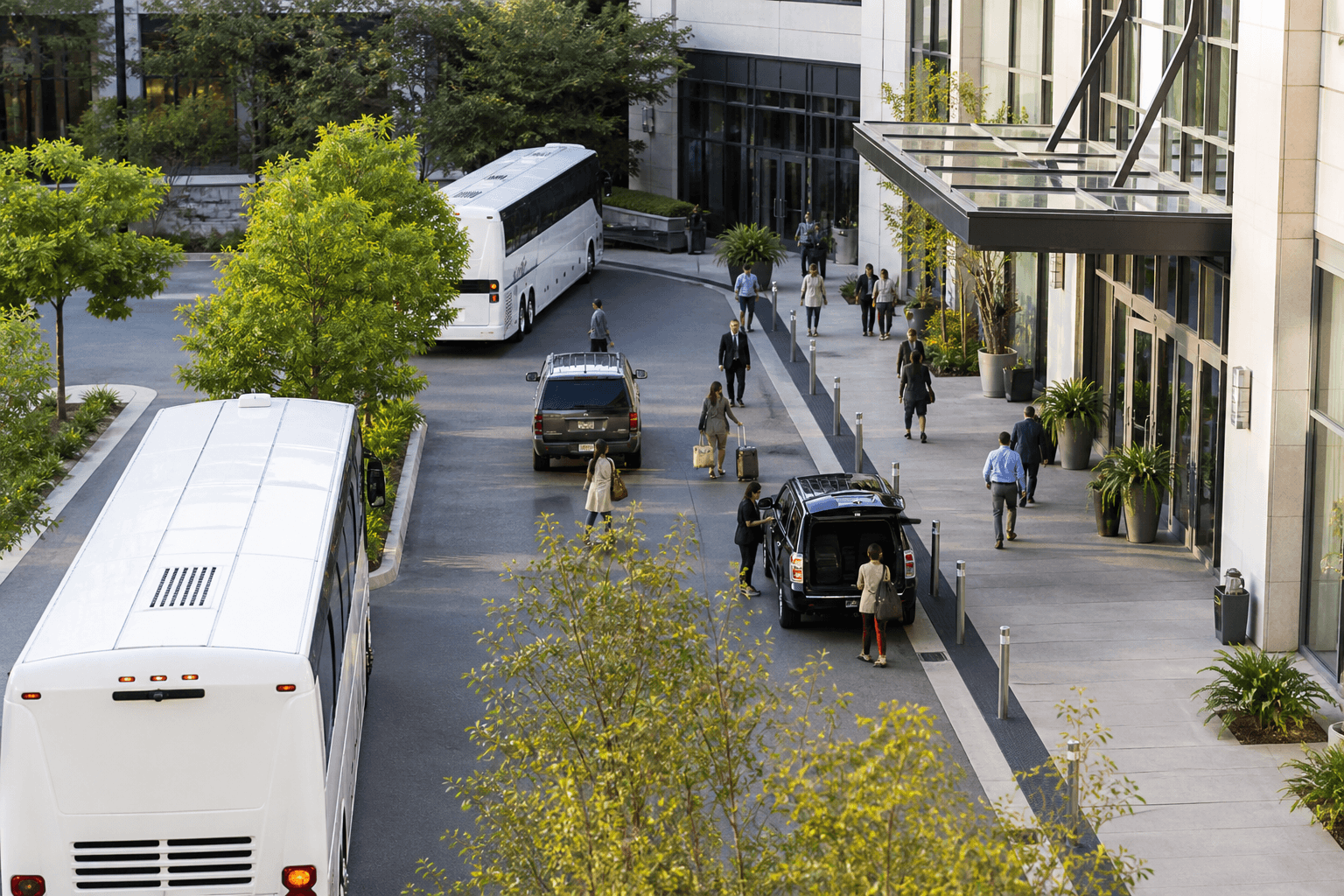
The right mix depends on venue access, guest profile, and how much control you need over arrival timing. Shuttles are best when the event is centered at a hotel, campus, or venue with limited on-site parking, because they compress arrivals into manageable waves. Valet works well for executive dinners or high-touch programs with a smaller guest count, but it requires room at the curb and a plan for ticketing, stacking, and retrieval. Self-parking is the least expensive option, but it places the burden on guests and can slow the start if the lot is remote or navigation is unclear. A useful rule: if more than 40 percent of your guests are expected to arrive during a 30-minute window, shuttles or valet usually reduce friction more effectively than self-parking alone. Many Charlotte programs use a hybrid model—self-parking for local attendees, shuttle service for hotel guests, and a controlled rideshare zone for late arrivals and departures.
What timing should you build into the transportation schedule?
Build the schedule backward from doors-open time, not from the session start. For corporate events, guests should typically arrive 20 to 30 minutes before the first agenda item, with the first shuttle wave landing 45 to 60 minutes before program start if check-in is formal. In Charlotte, traffic patterns can change quickly around Uptown, convention districts, and hotel corridors, so add a buffer of 10 to 15 minutes for each transfer leg during commuter hours. If the event includes a meal service, pad an extra 10 minutes so guests do not arrive simultaneously with catering set-up. For departures, plan one early wave 10 to 15 minutes before the program ends for guests who need to leave immediately, then stage the main shuttle pull-out in the final 15 minutes. This reduces curb pileups and keeps ride wait times predictable.
How should you manage accessibility and mobility needs?
Accessibility should be built into the route, not handled as a special exception at the end. Confirm ADA-compliant drop-off distances, ramp access, elevator availability, and whether the venue’s main entrance is the shortest accessible route from parking or shuttle drop-off. If your guest list includes attendees who use mobility devices, reserve front-row shuttle seating, identify the exact curb point where assistance is available, and assign a staff member to meet that vehicle before unloading begins. The check-in area should be reachable without crossing active vehicle lanes, and the path should remain clear of cords, signage stands, or decorative elements. If the venue has multiple entrances, designate one as the primary accessible entry so staff can give consistent instructions. The safest approach is to test the route in person during load-in and time the walk from drop-off to registration at the pace of an assisted guest.
What hotel-to-venue movement details matter most?
Hotel transfers work best when they feel coordinated, not improvised. Confirm the guest room block pickup point, the staging area for buses, and the loading time at the hotel before you publish the schedule. If multiple hotels are involved, separate them into tiers by distance and expected boarding time instead of running one all-stop route. That keeps the first bus from arriving late because the second hotel took too long to load. Ask the hotel whether bell staff can direct guests toward the right boarding lane, and make sure the meeting point is visible from the lobby with signage that matches the event name exactly. For an Uptown Charlotte hotel cluster, short transfer windows can still fail if guests are not told which bus to board; use simple printed callouts like “Group A departures every 15 minutes” rather than long instructions. Keep one coordinator reachable by phone or radio to resolve no-shows and reassign seats in real time.
How do you keep loading, unloading, and backstage movement controlled?
Venue loading should be treated as a separate traffic plan from guest arrival. Reserve loading dock time in writing, confirm the vehicle height limit, and assign a single unload sequence so production trucks, catering, and passenger transfers do not compete for the same lane. Passenger drop-off should never share the same space as equipment staging unless there is clear lane separation and staff directing each vehicle. If the venue sits on a busy Charlotte street, use a holding point two blocks away or a nearby secondary lot for early-arriving vehicles so the curb stays open for the scheduled arrival waves. Unload the venue first for signage and registration equipment, then hospitality items, then guest-facing assets that must be in place before doors open. A concise load-in schedule with names, arrival times, and access points prevents the common problem of everyone showing up at once and waiting for clearance.
How do you design a departure plan that avoids a bottleneck?
Departure flow should be planned as carefully as arrival flow because the biggest frustration often happens at the end of the event. Stagger the release by group if possible: VIPs and speakers first, hotel shuttles second, and general departure last. If ride-hailing is part of the plan, create a clearly marked pickup zone that does not conflict with shuttle loading. Guests should know whether they are walking to a curb, a lot, or a hotel pickup point before the final program segment begins. For events ending after dinner or late evening, keep lighting, signage, and staff coverage strong enough that guests can move safely without asking for directions. A final reminder on screen or from the host 10 minutes before close can reduce congestion dramatically by telling guests where to go next instead of sending everyone into the same exit at once.
Need a tighter transportation plan for your Charlotte event?
If you want a transportation plan that accounts for timing, capacity, accessibility, and guest movement from curb to ballroom, contact Nexa Events to discuss your Charlotte event logistics.
Contact Nexa Events