Charlotte’s Sports Surge Is Raising the Event Planning Bar
New Charlotte sports-event numbers point to a city where room nights, guest expectations, and timing pressure are all rising for corporate planners.

A practical Charlotte corporate event timeline for venue holds, production, catering, approvals, transportation, rehearsals, and contingency deadlines.

A practical Charlotte corporate event timeline for venue holds, production, catering, approvals, transportation, rehearsals, and contingency deadlines.
For most Charlotte corporate events, the timeline should start 6 to 12 months out, with the exact lead time determined by guest count, venue competition, and production complexity. The first decision is not décor or menu; it is scope. Confirm the audience size range, event objective, format, and whether the program needs stage time, sponsor inventory, or breakout space. Once scope is fixed, place venue holds immediately because desirable Charlotte dates can disappear quickly during spring, fall, and major convention weeks. In the same window, set a budget range and approve a working event owner who can make decisions without delay. If you wait to clarify scope until after venue shopping, you risk holding the wrong size room or paying for unnecessary square footage.
Venue holds should be placed as soon as the event date range is known, then narrowed once attendance, room flow, and AV requirements are clearer. In Charlotte, venues near Uptown and the South End often have higher demand windows, so a soft hold should be backed by an internal decision deadline within 3 to 5 business days. Contract review should happen before any vendor is fully committed, especially around load-in access, overtime, minimum spend, union or labor rules, parking, insurance, and cancellation terms. A practical rule: if the event depends on a specific ballroom, outdoor terrace, or large pre-function area, do not advance production planning until the venue agreement is in drafting. That prevents rework on staging, guest arrival flow, and capacity assumptions.
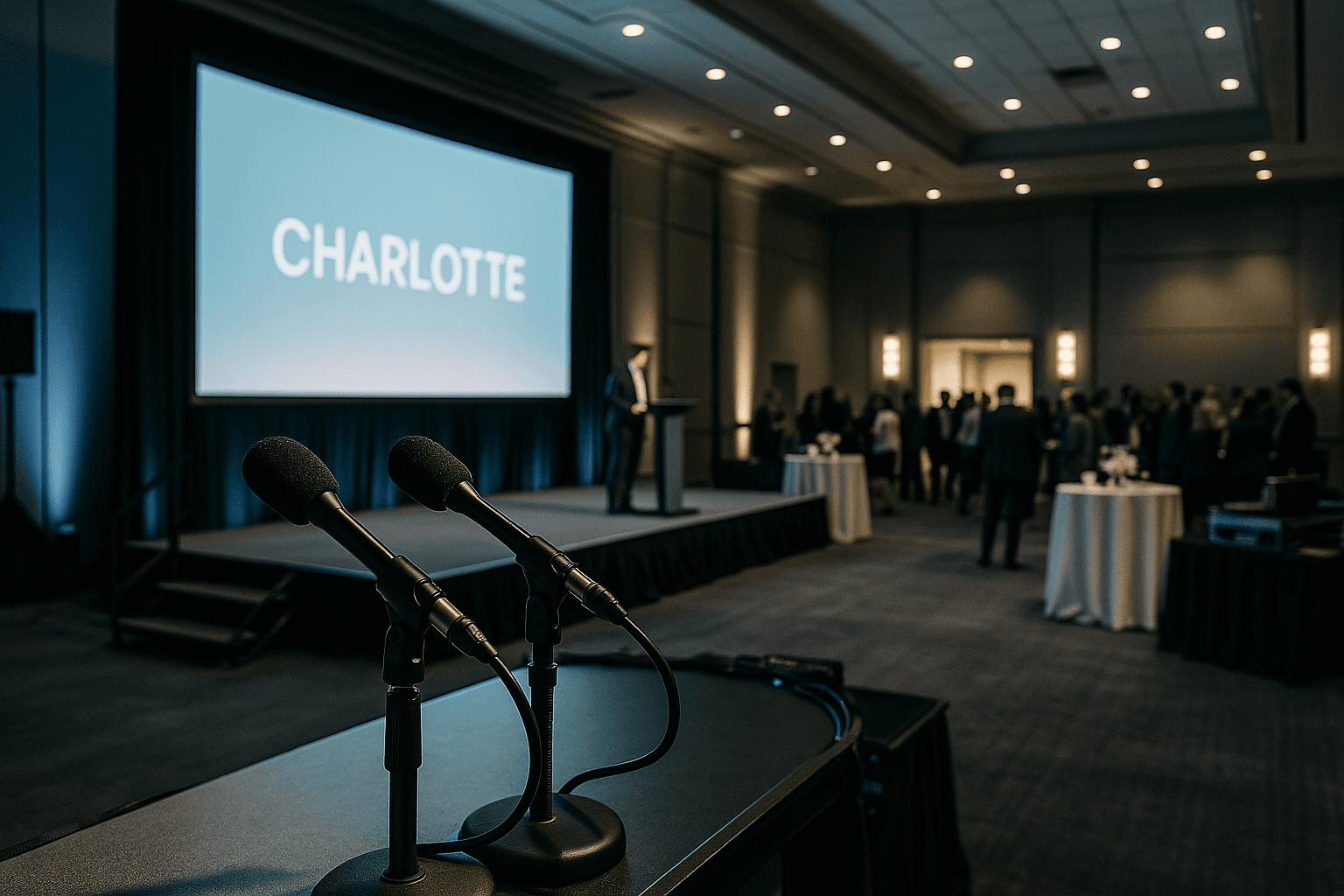
Production should be mapped 10 to 14 weeks before the event for standard corporate programs, and earlier for multi-room conferences or branded stages. Start with the technical rider: screen sizes, audio needs, microphones, confidence monitors, lighting, internet bandwidth, and power distribution. Then move to creative approvals in a fixed order—event theme, signage copy, speaker graphics, sponsor logos, and run-of-show timing. The key tradeoff is speed versus revision cycles. If leadership wants multiple approval rounds, reserve time for them now rather than compressing design later. Final production approvals should be locked at least 2 weeks before the event so vendors can print, build, test, and stage without last-minute substitutions.
Catering should move from concept to commitment 8 to 10 weeks before the event for most Charlotte corporate functions, sooner if the menu depends on specialty rentals, plated service, or multiple meal periods. First, decide whether the event requires breakfast, lunch, reception service, or a single peak serving window. Then confirm dietary accommodation counts, beverage format, and whether food presentation must support networking or seated programming. The main operational question is service speed: a plated meal creates a more formal experience but requires tighter timing and more staffing; stations or reception-style service offer flexibility but can create congestion if the room is undersized. Final counts typically need to be submitted 5 to 7 business days before the event, but internal approval should happen earlier so finance and leadership are not negotiating menu changes at the last minute.
Guest communications should be built backward from the event date, not sent ad hoc. Save-the-date notices go out as soon as venue and date are secure, especially for executive audiences with travel constraints. Formal invitations generally follow 6 to 8 weeks before the event, with RSVP reminders at 3 weeks, 10 days, and 72 hours if the attendance threshold matters to catering or room setup. For Charlotte events with out-of-town attendees, include parking guidance, rideshare instructions, and arrival timing in the first invite rather than as a follow-up. If the event includes multiple session choices, close registration early enough to finalize signage, seating, and badge inventory. The operational goal is to avoid changing room layout after catering and production have already been confirmed.
Transportation planning should begin 4 to 6 weeks out if guests need shuttles, airport transfers, VIP arrivals, or group movement between hotel and venue. In Charlotte, this matters most when guests are coming from multiple properties or when the venue has limited on-site parking. Confirm pickup points, timing buffers, and who is responsible for communicating changes if traffic or weather disrupts the schedule. If the event includes executives, speakers, or board members, create a separate arrival plan with a contact list and a 15-minute buffer before they are due on site. A practical benchmark: if more than 25 percent of attendees are traveling in from outside the immediate area, transportation details should be treated as a core workstream, not a courtesy note.
The final two weeks are for verification, not redesign. Confirm headcount, dietary restrictions, speaker order, print quantities, power needs, and emergency contacts. Reconfirm delivery windows, load-in access, and any building restrictions that could affect setup. At least 7 days before the event, distribute the final run-of-show to internal stakeholders so every decision maker understands timing, handoffs, and escalation points. Rehearsal should occur 24 to 48 hours before doors open, or earlier if external speakers need time on mic. The rehearsal should cover speaker entrances, slide changes, cue points, room turns, and contingency adjustments if a keynote runs long. If there is any risk to timing, assign one person authority to shorten nonessential segments without waiting for group consensus.
If you need an operations-first plan for a Charlotte corporate event, Nexa Events can help align your venue, vendors, approvals, and day-of contingencies into one workable schedule. Contact Nexa Events here: https://nexaevents.com/contact-us
Start 6 to 12 months ahead for most corporate events, with earlier planning for large conferences, peak-season dates, or programs needing multiple vendors and complex AV.
The venue hold is usually the first deadline to protect, because date availability and room size will shape every other decision, including catering, production, and guest flow.
A final internal headcount target should be set before vendor confirmations, while the working final count usually needs to be submitted 5 to 7 business days before the event, depending on the venue and caterer.
Plan for at least a 15-minute buffer for VIP arrivals and additional time for shuttle movements, traffic, parking, and weather-related delays if guests are traveling across Charlotte.
Rehearsals should happen 24 to 48 hours before the event when possible, especially if executives, speakers, or AV cues must be timed precisely.
The biggest mistake is approving venue, catering, and production in separate silos. Those decisions need to be sequenced together so room layout, service style, and technical requirements stay aligned.
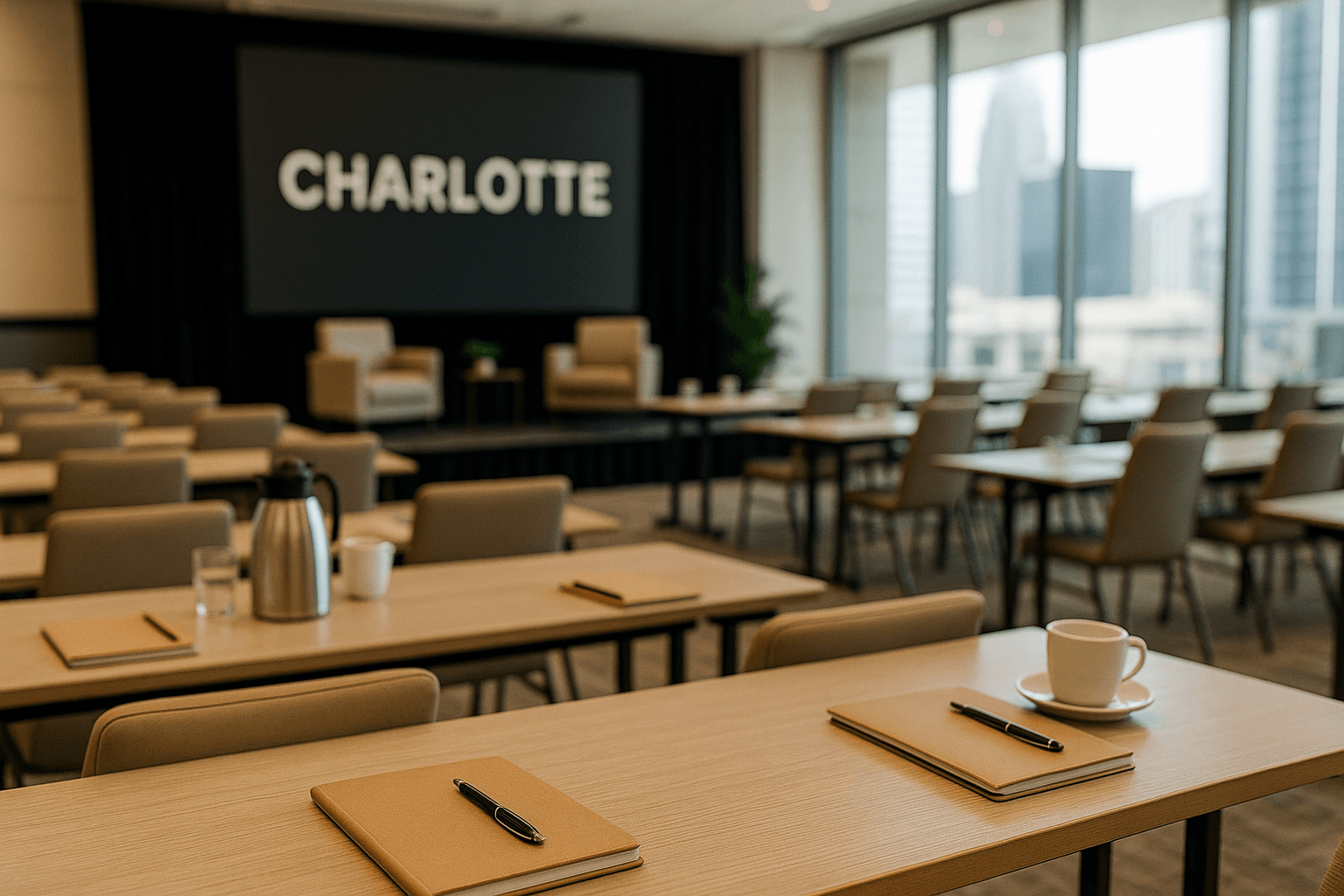
Plan a polished Charlotte conference with guidance on venue selection, agenda design, guest flow, production, and hospitality that supports both executive objectives and attendee experience.