In the high-stakes corporate landscape of 2026, the "company event" has undergone a radical metamorphosis. It is no longer just a line item in the HR budget or a required annual gathering to check a box. Today, forward-thinking organizations—from Silicon Beach tech giants to Beverly Hills luxury brands—view company event planning as a critical extension of their brand’s marketing engine and corporate culture strategy.
As digital noise reaches an all-time high, the value of a physical, tactile experience has skyrocketed. However, simply gathering people in a room is no longer enough to move the needle. To capture attention and drive genuine brand loyalty, firms must transition from traditional logistics to what we at Nexa Events call Experience Architecture.
1. The Strategic Evolution of Event Management Companies
The role of event management companies has shifted from "order takers" to "strategic consultants." Historically, a planner's success was measured by binary metrics: Did the food arrive on time? Did the microphones work? In 2026, elite firms are judged on their ability to solve complex business problems through human connection.
Whether the goal is to launch a disruptive product, align a global team after a merger, or host a high-profile non-profit gala, the planning process must begin with a strategic "Why" before a single venue is toured. This deep-layered strategy is what separates premium event planning firms from standard coordinators.
The Three Pillars of Modern Corporate Strategy
Brand Alignment: Every touchpoint—from the haptic feedback on a digital invitation to the ambient scent in the foyer—must reflect the company’s core values.
Attendee Psychology: We map the "Emotional Arc" of the guest. We identify where they should feel anticipation, where they should feel connection, and where they should experience the "peak" euphoria of the brand message.
Technological Integration: Using data to personalize the experience in real-time, ensuring that a 500-person event feels like a 1-on-1 conversation.
2. Beyond Logistics: The Rise of Experience Architecture
When we discuss company event planning at the highest level, we are talking about sensory storytelling. In a world of remote work and Zoom fatigue, a physical event is often the only time a brand becomes "tangible" to its stakeholders.
Scent-Scaping and Audio-Visual Immersion
We are seeing a massive trend toward "Sensory Branding." Leading event planning firms are now working with olfactive experts to design custom scents for conferences that improve memory retention. Scientific studies have shown that scent is the sense most closely linked to memory; by diffusing a custom "brand fragrance" during a keynote, we ensure the message lingers long after the guests leave.
Combined with 360-degree projection mapping and spatial audio, a standard ballroom can be transformed into an immersive brand universe. Imagine a sustainability summit where the room slowly transitions from a lush rainforest to a clean-tech laboratory as the presentation progresses.
The "Phygital" Guest Journey
The most successful event management companies in 2026 are those that bridge the gap between the physical and the digital—the "Phygital" realm.
Pre-Event Engagement: AI-driven concierge apps that don’t just give a schedule, but tailor the agenda to each guest's professional interests and LinkedIn profile.
During the Event: Wearable tech and NFC-enabled badges that allow for frictionless networking. No more fumbling with business cards; a simple "digital handshake" captures the lead and enters it into the company CRM instantly.
Post-Event Analytics: Sophisticated data dashboards that show which sessions had the highest "dwell time," allowing companies to refine their marketing message based on what actually resonated with the audience.
3. Measuring the "Unmeasurable": ROI vs. ROE
One of the biggest historical challenges in company event planning has been proving the return on investment (ROI). How do you quantify the value of a handshake or a shared dinner? In 2026, we have moved toward tracking Return on Experience (ROE).
By utilizing specialized event coordination services, companies can now track metrics that were previously invisible:
Sentiment Analysis: Using AI to analyze social media mentions, facial recognition (for mood tracking), and on-site feedback in real-time.
Lead Velocity: Measuring how quickly a prospect moves through the sales funnel after attending a brand activation compared to traditional digital leads.
Employee Net Promoter Score (eNPS): Tracking the long-term lift in morale and retention following internal culture events, which directly impacts a company's bottom line by reducing turnover.
4. Navigating the Los Angeles Landscape: A Planner's Advantage
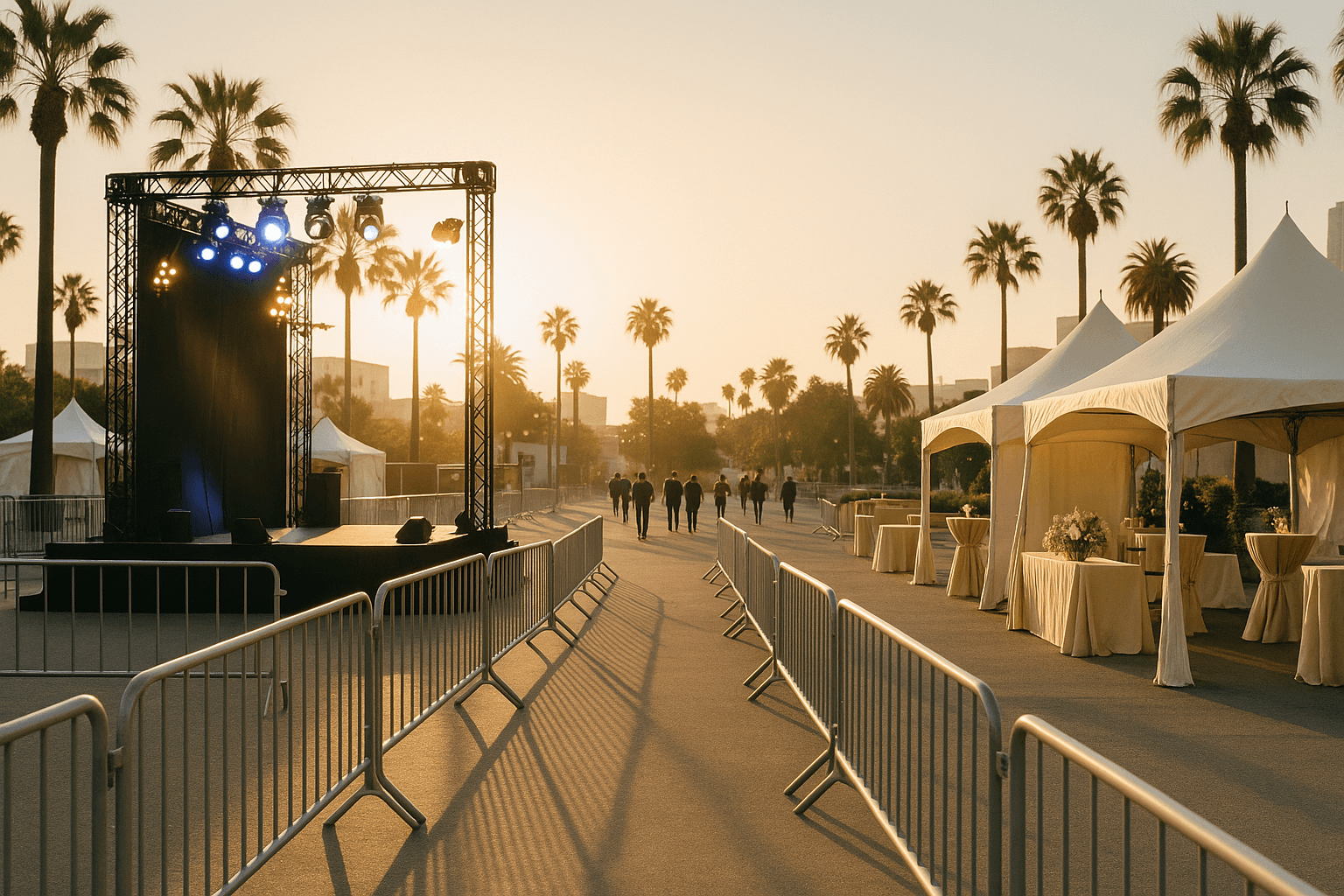
Los Angeles is a unique environment for event planning firms. Between the logistical nightmare of "The 405," strict fire marshal codes for immersive builds, and the incredibly high expectations of a VIP-heavy guest list, local expertise is a non-negotiable requirement.
Venue "Key-Holder" Access
Choosing a partner that understands the nuances of iconic venues—such as the Getty Center, the Academy Museum, or the exclusive private estates of Malibu—is the difference between a logistical struggle and a seamless production. High-growth event management companies stay ahead by maintaining deep, personal relationships with these locations, ensuring their clients get access to dates and spaces that aren't available to the general public.
5. How to Vet Your Next Event Planning Partner
As you look to scale your corporate presence and increase your brand’s physical footprint, your choice of partner is paramount. When interviewing event planning firms, don't just ask about their portfolio; ask about their process.
"How do you integrate our specific KPI tracking into the event flow?"
"What is your 'Plan B' for high-tech failures during live activations?"
"Can you demonstrate a time you turned a traditional logistical challenge into a branding opportunity?"
A firm that cannot answer these questions isn't a strategic partner; they are a vendor. In 2026, your brand deserves more than a vendor.
Conclusion: The Future of Corporate Connection
The era of the "standard" corporate gala is over. The future belongs to the brands that dare to be immersive, data-informed, and strategically sound. As one of the premier event management companies in the region, Nexa Events is dedicated to pushing these boundaries. We ensure that your next company event isn't just a date on the calendar—it's a catalyst for measurable growth.
.png&w=1920&q=75)
.png&w=1920&q=75)