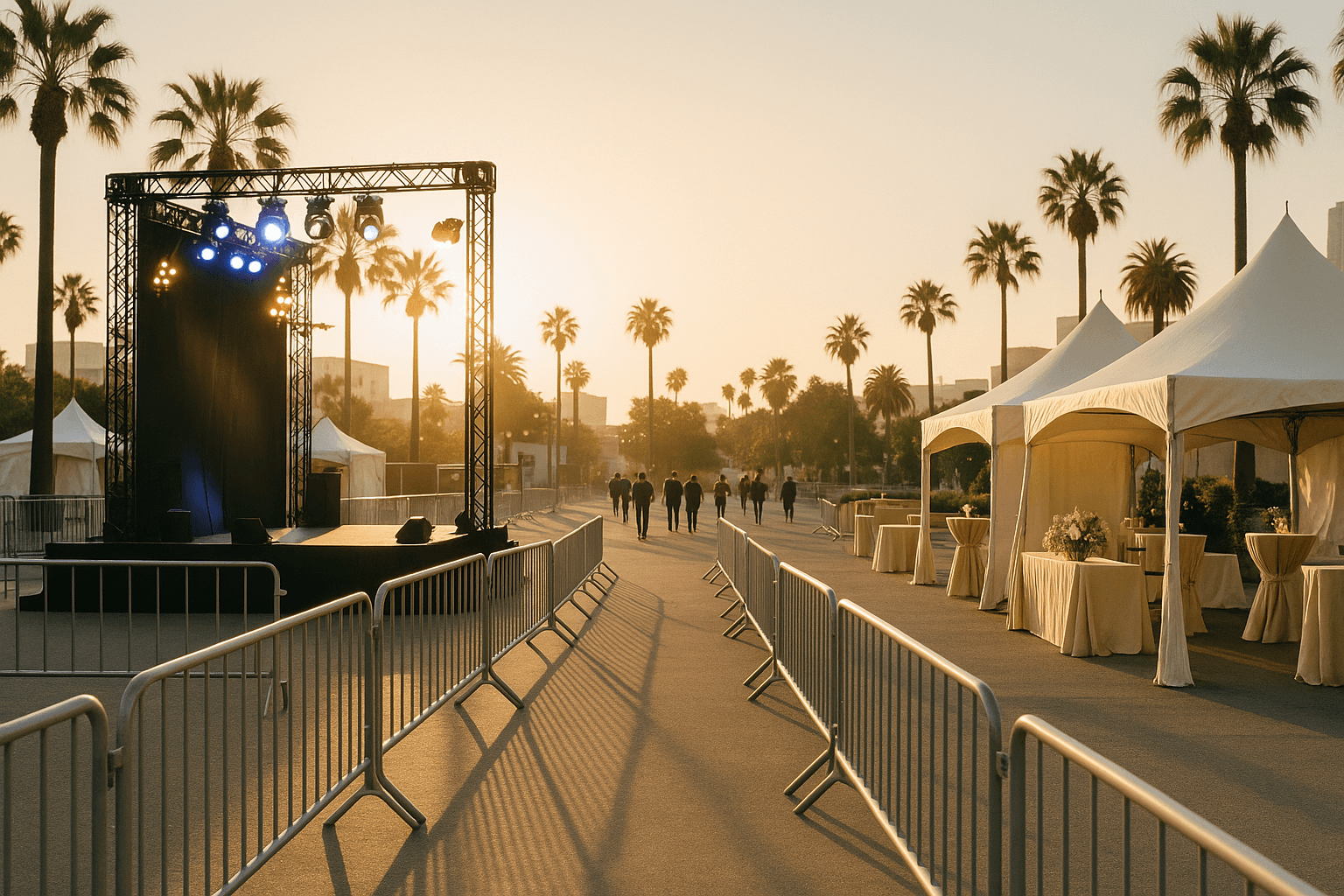
LA World Cup Fan Zones Raise the Event Production Bar
Los Angeles World Cup 26 programming shows how modern large-scale events now depend on regional guest flow, transit planning, accessibility, and distributed experiences.
This long-form analysis explores the evolution of the event production agency in 2026. It covers the shift from tactical logistics to "experience architecture," the integration of spatial computing and AI-driven personalization, and how leading event production companies in Los Angeles are using sensory design to maximize brand ROI and Return on Experience (ROE).
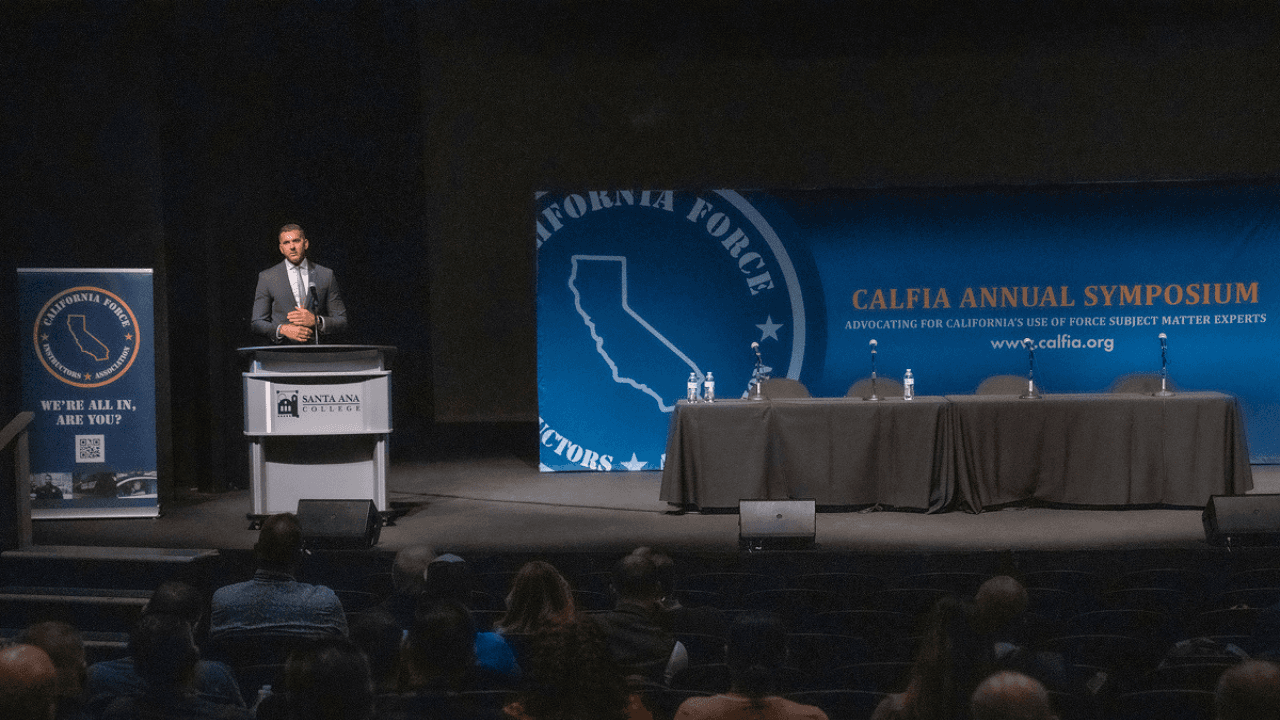
The Event: In 2025, the California Force Instructors’ Association (CALFIA) hosted its premier Use of Force Conference at Napa Valley College. The mission was clear: "Better Training Means Better Policing." The event served as a critical hub for law enforcement trainers to master responsible use-of-force strategies, de-escalation tactics, and professional accountability.
In the high-stakes landscape of 2026, the traditional model of the event production agency has undergone a radical metamorphosis. We have moved past the era of "spectacle for spectacle's sake." Today, the most successful event production companies in Los Angeles and beyond are those that have transitioned into the role of "Experience Architects." This shift is driven by a sophisticated audience that prizes authenticity and participation over passive observation. For a modern brand, an event is no longer a localized moment in time; it is a high-velocity content engine designed to drive multi-channel engagement and long-term loyalty.
The hallmark of a premier event production agency today is its mastery of immersive event production. This is no longer limited to a simple VR headset or a basic photo booth. In 2026, we are seeing the mainstream integration of spatial computing, where digital elements are seamlessly anchored into the physical environment. Using advanced LiDAR and AR-glasses (and increasingly, high-fidelity smartphone overlays), agencies are creating "Persistent Digital Layers" over physical venues. This allows a historic Los Angeles ballroom to be digitally transformed into a futuristic laboratory or a lush ecosystem without moving a single piece of physical furniture.
This technology allows for a level of storytelling that was previously confined to cinema. Imagine a product launch where the "stage" isn't a fixed platform, but a 360-degree environment that reacts to the speaker's gestures. As they discuss the growth of a brand, digital data visualizations bloom around the audience, allowing guests to reach out and "interact" with the statistics. This tactile engagement is a critical component of what we call "Sensory Branding," which has been proven to increase brand recall by over 70% compared to traditional presentations.
Perhaps the most significant disruption in event production agency services is the deployment of mature Artificial Intelligence. In 2026, AI is the invisible hand that curates the "Segment of One" experience. For large-scale conferences or corporate activations, the "one-size-fits-all" agenda is dead. Modern event production companies utilize AI-driven recommendation engines—similar to those used by Netflix or Spotify—to tailor every guest's journey. From the moment a guest registers, the AI analyzes their professional interests and behavioral data to suggest a personalized itinerary that includes specific breakout sessions, networking "matchmaking," and even curated culinary choices.
This personalization extends into the live event flow itself. Using anonymized computer vision and heat-mapping, an event production agency can now monitor the "energy" of a room in real-time. If the data indicates a dip in engagement in a specific zone, the AI can automatically trigger a shift in environmental factors—adjusting the lighting temperature, changing the tempo of the background audio, or deploying "Digital Concierges" to guide guests toward more active areas. This ensures that the event maintains a state of "Flow," maximizing the attendee's attention span and the brand's impact.
In 2026, sustainability is no longer a marketing "nice-to-have"; it is a foundational technical requirement. Leading event production companies in Los Angeles are pioneering the "Zero-Waste Experience" through the use of digital-first infrastructure. By replacing physical signage with high-resolution LED walls and AR wayfinding, agencies are drastically reducing the carbon footprint of their productions. Furthermore, the use of "Digital Twins"—1:1 virtual replicas of the venue—allows for precise logistical planning. This means that every piece of equipment, every floral arrangement, and every catering pallet is accounted for with millisecond accuracy, minimizing the waste of transport and materials.
Moreover, the shift toward "Modular Scenic Design" allows agencies to create bespoke environments using reusable, high-tech materials that can be reconfigured for multiple clients. This "Circular Production" model is particularly resonant in the eco-conscious California market. Brands are now being judged by the "Radical Transparency" of their events; guests want to know not just what they are experiencing, but the environmental cost of that experience. An agency that can provide a "Sustainability Scorecard" for their production is now the preferred partner for Fortune 500 firms.
The final frontier for the modern event production agency is the shift from traditional ROI to Return on Experience (ROE). In 2026, we use "Biometric Sentiment Tracking" and "Lead Velocity" to measure success. Instead of just counting badges at the door, we track the quality of interactions. How long did a guest stay in a specific brand activation? What was the "Sentiment Shift" after a keynote? By providing these deep-dive analytics, event production companies are proving their value as strategic marketing partners rather than mere vendors.
This data allows brands to treat their event as a "Live Laboratory." The insights gained from how a guest interacts with a prototype in an immersive zone can inform product development and global marketing strategies for the next year. In this way, the event becomes the starting point of a 12-month customer relationship, rather than a one-night stand.
The industry is defined by "Experience Architecture," which includes spatial computing (AR/VR), AI-driven personalization of guest journeys, and a shift toward measuring Return on Experience (ROE) through biometric sentiment data.
This article deep-dive explores why Los Angeles brands are shifting from massive ballroom galas to high-impact "Micro-Events." It highlights specific 2026 trends like Tactile Sophistication, Creator Pods, and Neuroinclusive Design. By referencing iconic LA areas—from the creative lofts of the Arts District to the coastal estates of Malibu and the historic glamour of Beverly Hills—this article signals to Google that your agency is the local expert for the "New Luxury" event scene.
.png&w=1920&q=75)
.png&w=1920&q=75)