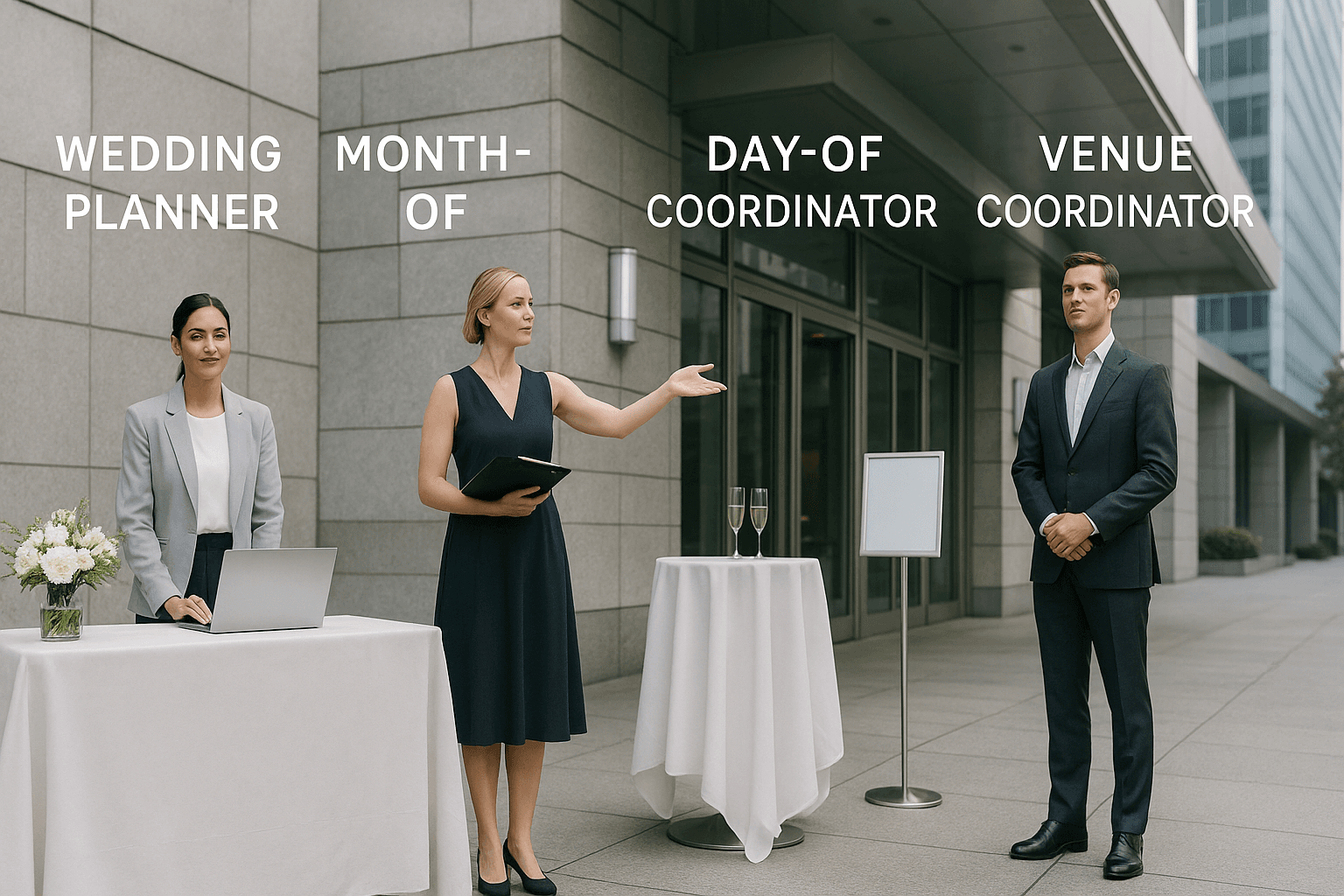
A wedding planner, month-of coordinator, day-of coordinator, and venue coordinator all serve different operational roles. This guide clarifies who handles logistics, vendor communication, timelines, and problem-solving so couples can spot coverage gaps before they sign contracts.
Who owns the overall wedding plan?
The full-service wedding planner owns the master plan. That means budget guidance, vendor sourcing, design direction, contract review support, timeline architecture, and issue prevention across the entire planning period. If the wedding has multiple moving parts—hotel room blocks, transportation, ceremony-to-reception transitions, specialty rentals, or a tight setup window—the planner is the person who connects all of it.
A venue coordinator, by contrast, owns the venue’s interests: room access, house rules, catering or in-house F&B coordination, load-in/load-out timing, floor plan constraints, and venue staff communication. They are there to protect the property’s operations, not to run your whole wedding. If you only have a venue coordinator and no independent planner, you are still responsible for everything outside the venue’s scope.
What does a full-service planner do that venue staff usually will not?
A full-service planner is hired to manage the client-side decision chain. In practice, that means they track deadlines, keep vendor decisions aligned with the budget, and translate the couple’s priorities into a working production plan. They often lead vendor discovery, compare proposals, coordinate design meetings, and create a detailed wedding-day run of show.
They also manage cross-vendor dependencies that venue staff typically do not own. Example: if the florist needs early access because the ceremony arch must be installed before chairs are placed, the planner negotiates that sequence with the venue and the rental company. If the photographer wants a first look in a specific location, the planner confirms timing, access, and transportation.
The planner is the operational quarterback. The venue coordinator is usually one node in that system.
What is the difference between month-of and day-of coordination?
Month-of coordination is usually more accurately described as pre-event handoff management. The coordinator steps in about 4–8 weeks before the wedding, gathers vendor contracts, builds or validates the timeline, confirms logistics, and becomes the communication hub so the couple does not have to answer every operational question in the final stretch.
Day-of coordination is narrower. The coordinator is present on the wedding day to execute the plan, troubleshoot immediate issues, cue vendors, manage timing, and keep the event moving. If there is no prior handoff, a true day-of coordinator is at a disadvantage because they do not have time to fix incomplete vendor communication, missing setup details, or unclear responsibilities.
For most weddings, month-of support is the safer minimum if you have booked vendors independently and need someone to unify the plan before the event.
What exactly does a venue coordinator handle?
Venue coordinators are highly useful, but their duties are limited to the venue’s operations. Typical responsibilities include opening the site, confirming where vendors can park or load in, coordinating ceremony and reception room turnover within venue rules, managing venue staff, and addressing venue-side issues such as lighting, heat, or space access.
What they usually do not handle: finding your florist, fixing your vendor timeline, calling the shuttle company, updating your stationery team, or making decisions for your family members. Many couples overestimate venue coordination because the title sounds comprehensive. It is not.
A practical test: if the issue is about the building, the venue coordinator likely owns it. If the issue is about your wedding strategy, another planning professional should own it.
Where do responsibility gaps usually appear?
The most common gaps happen at handoff points. First is vendor communication: a couple assumes the venue will tell all vendors where to go, while the venue assumes the planner or couple will distribute the final run sheet. Second is setup accountability: no one clearly owns signage placement, welcome table styling, escort cards, or ceremony item staging. Third is timeline enforcement: someone writes the schedule, but no one is empowered to adjust it when hair and makeup run late.
Another frequent gap is family management. Venue staff will not usually make judgment calls about family photos, ceremony seating disputes, or last-minute guest questions. A planner or coordinator should own that communication layer.
Before signing contracts, ask: who confirms vendor arrivals, who handles the emergency kit, who carries printed timelines, and who makes the call if the ceremony starts 15 minutes late?
How should couples compare packages before they book?
Use a coverage checklist, not just a price comparison. Ask each provider whether they will: create or review the master timeline; attend the rehearsal; manage vendor arrival order; cue ceremony participants; oversee floor plan transitions; and stay until the final reception milestone you care about most.
Also ask what they explicitly exclude. Many contracts omit invitation management, guest transportation, payment distribution, room blocks, or wedding-week issue resolution. If the service says “coordination” but does not include vendor communication before the event, you may be left with an incomplete handoff.
The easiest decision rule is this: if you want support from the first vendor inquiry through final teardown, you need a planner. If you already planned the wedding but need someone to operationalize it, month-of coordination is often the right fit. If you only need ceremony-and-reception execution, day-of may be enough. If you only need venue-side logistics, venue coordination may suffice.
What should be in the handoff packet?
The handoff packet should make the wedding executable without guesswork. Include the final vendor contact list, signed contracts, full timeline, floor plan, ceremony cue sheet, transportation schedule, payment due dates, rain plan, setup notes, family photo list, and any venue rules that affect timing or layout.
A strong packet also identifies decision-makers. For example, list who approves timeline changes, who can authorize overtime, and who handles vendor questions on site. Without that clarity, small delays can become avoidable conflicts.
If your planner or coordinator asks for this information early, that is a good sign. It means they are building an operational system, not just showing up with a clipboard.
Need a clear division of wedding-day responsibilities?
If your contracts leave gaps between planning, vendor management, and venue duties, Nexa can help you map ownership before the pressure hits. Review your wedding support needs with a planning advisor.
Related Nexa Planning Resources